At a glance
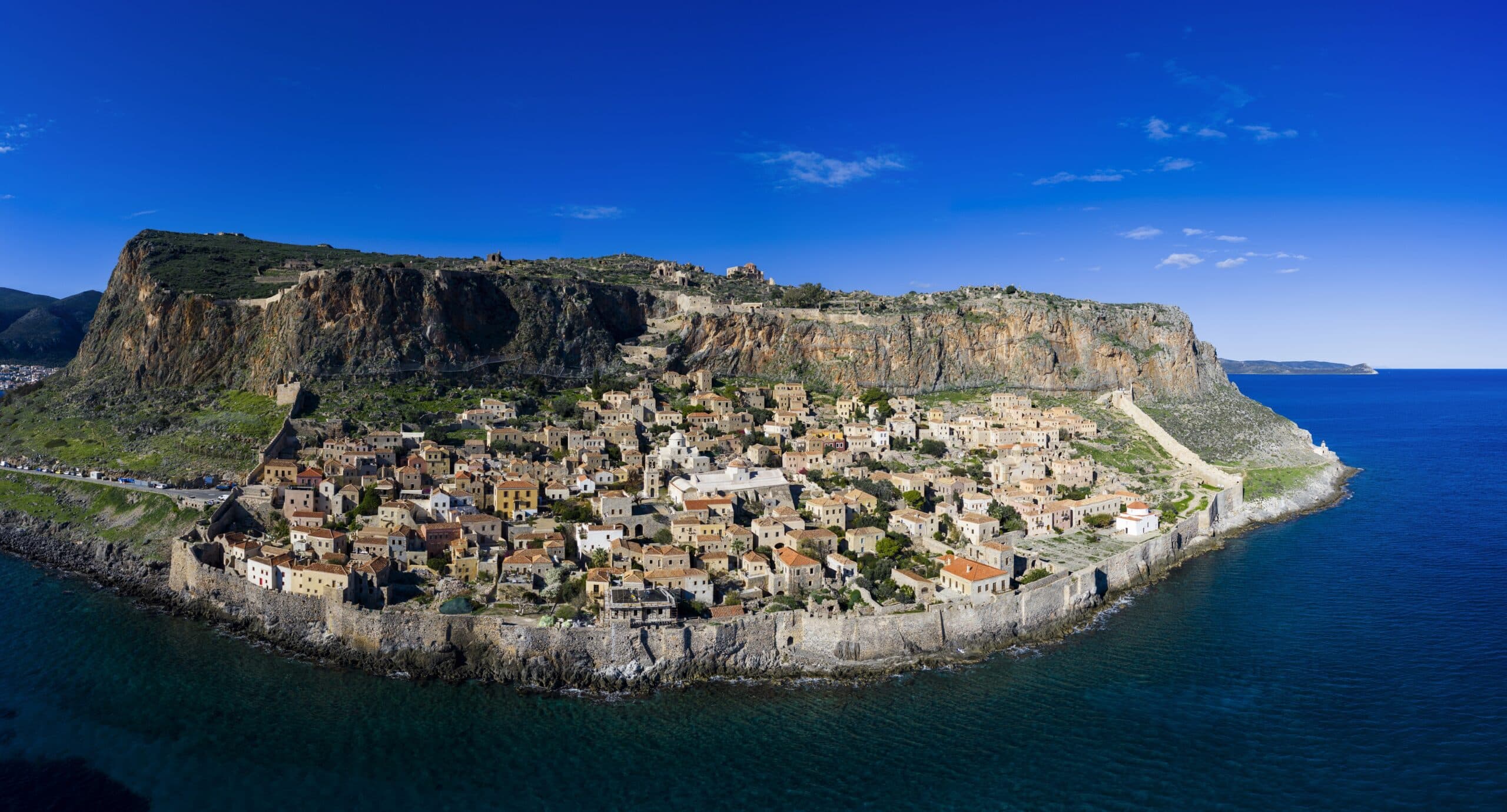
Imagine a fairytale land where stories of old are whispered around every corner. A medieval walled town that proudly stands over the sea, waiting to reveal its secrets. An imposing, fortified rock in the Myrtoan Sea, connected to the rest of the Peloponnese by a narrow strip of land. Monemvasia is a castle town founded in the 6th century AD that has been inhabited without interruption ever since. Touring its atmospheric narrow streets is something you must experience at least once in your life. Within the walls, Byzantine churches, stone-built houses, and winding cobbled streets create breathtaking magical images.
Route information
Distance
2.6 km
Estimated duration
~3h (at a leisurely pace and with stops at monuments and viewpoints)
Difficulty level
Easy
Route type
Walking
Route Category
Linear
When to go
Monemvasia is a destination for all seasons, with each period revealing a different facet of the fortified town. Spring and autumn are considered ideal seasons for a visit, as from March to May and from September to October the weather is mild and temperatures are favourable for touring the narrow, cobbled streets. Easter is a major religious festival in Greece; the procession of Epitaphios takes place on Good Friday, passing through Monemvasia’s atmospheric alleys, while participants follow holding lit candles, and on Holy Saturday, the Resurrection Mass is celebrated at midnight. If, on the other hand, you want to avoid the crowds, winter reveals a different, quiet, but equally charming version of the town.
Did you know?
- - The rock of Monemvasia was severed from the mainland Peloponnese following a strong earthquake in AD 375.
- - The town is a fascinating crossroads of cultures. Byzantines, Franks, Venetians, and Ottomans passed through this place, all leaving their mark.
- - According to local tradition, the church of Agios Nikolaos in Lower Town never functioned as a place of worship. It served as an armoury during the second period of Ottoman rule, while from the mid-19th to the mid-20th century it housed a primary school, which the poet Yiannis Ritsos attended.


