The Canon of Doric Temple Construction
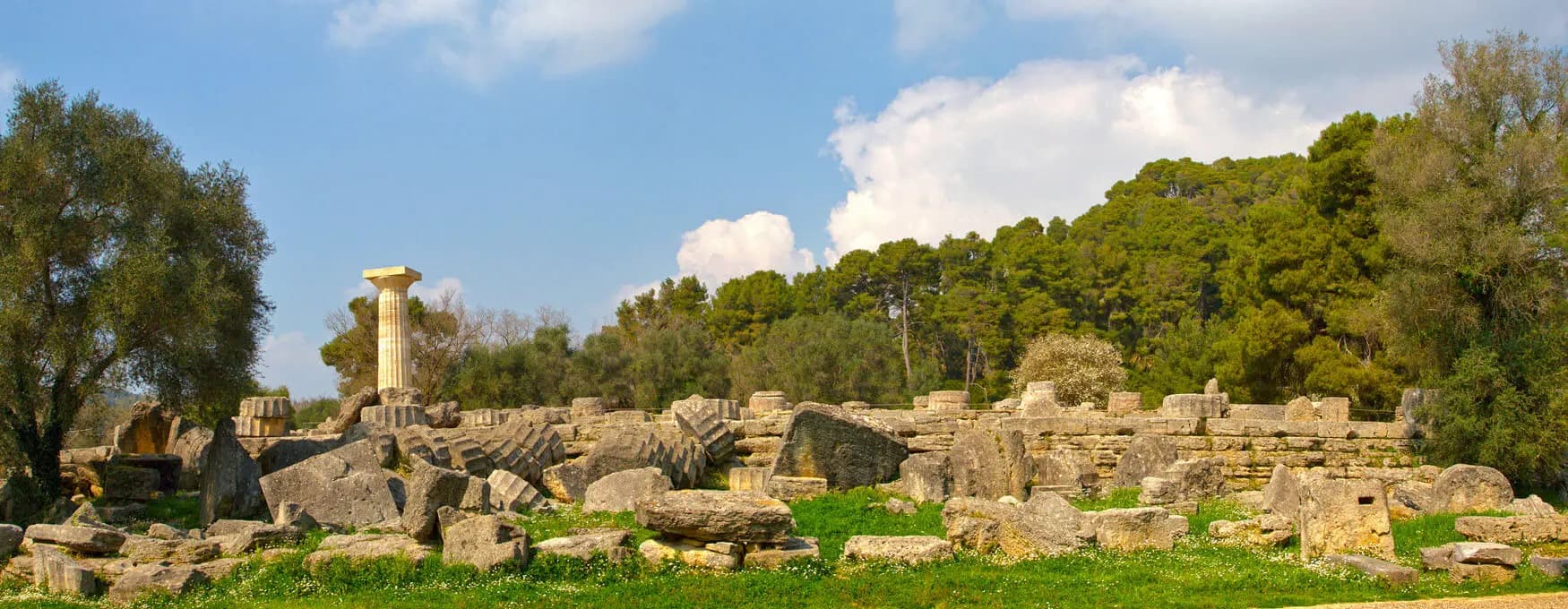
The majestic Temple of Zeus was the most important structure in Altis of Ancient Olympia. It is the largest temple in the Peloponnese and is considered the perfect expression of the Doric order. It was built by the architect Libon of Elis between 470 and 456 BC, using spoils from the wars of the Eleans against the Triphylian cities.
Architecture and Structure
The temple was a peripteral structure, built from local fossiliferous limestone and coated with white marble dust. It comprised a pronaos (vestibule), a sekos (inner chamber), and an opisthodomos (rear room). On the floor of the pronaos, a Hellenistic mosaic depicting tritons has been preserved, and the official crowning of the Olympic Game winners took place at its entrance. The sekos was divided into three aisles by double rows of columns.
The Chryselephantine Statue of Zeus
In the back of the sekos, the twelve-metre-high chryselephantine statue of Zeus dominated the space, a masterpiece by Phidias and one of the Seven Wonders of the Ancient World. The god was depicted enthroned, holding a sceptre and a winged Nike. The statue was later moved to Constantinople, where it was destroyed in a fire in AD 475.
Sculpted Decoration
The temple boasted many sculptures in an austere style:
The temple was razed by fire in AD 426 at the decree of Theodosius II and subsequently collapsed after a series of powerful earthquakes in the 6th century AD. The initial excavations were conducted in 1829 by the French Scientific Expedition, with the unearthing completed by German archaeologists. Today, the exquisite sculptural ornamentation is showcased at the Archaeological Museum of Ancient Olympia, while sections of the metopes are in the Louvre.
Architecture and Structure
The temple was a peripteral structure, built from local fossiliferous limestone and coated with white marble dust. It comprised a pronaos (vestibule), a sekos (inner chamber), and an opisthodomos (rear room). On the floor of the pronaos, a Hellenistic mosaic depicting tritons has been preserved, and the official crowning of the Olympic Game winners took place at its entrance. The sekos was divided into three aisles by double rows of columns.
The Chryselephantine Statue of Zeus
In the back of the sekos, the twelve-metre-high chryselephantine statue of Zeus dominated the space, a masterpiece by Phidias and one of the Seven Wonders of the Ancient World. The god was depicted enthroned, holding a sceptre and a winged Nike. The statue was later moved to Constantinople, where it was destroyed in a fire in AD 475.
Sculpted Decoration
The temple boasted many sculptures in an austere style:
- Eastern pediment: The chariot race between Pelops and Oenomaus, with Zeus as the judge.
- Western pediment: The Centauromachy, with Apollo as the central figure.
- Metopes: The twelve labours of Heracles, which adorned the entrances of the pronaos and the opisthodomos.
The temple was razed by fire in AD 426 at the decree of Theodosius II and subsequently collapsed after a series of powerful earthquakes in the 6th century AD. The initial excavations were conducted in 1829 by the French Scientific Expedition, with the unearthing completed by German archaeologists. Today, the exquisite sculptural ornamentation is showcased at the Archaeological Museum of Ancient Olympia, while sections of the metopes are in the Louvre.