An Underground Monument to Early Christian Faith
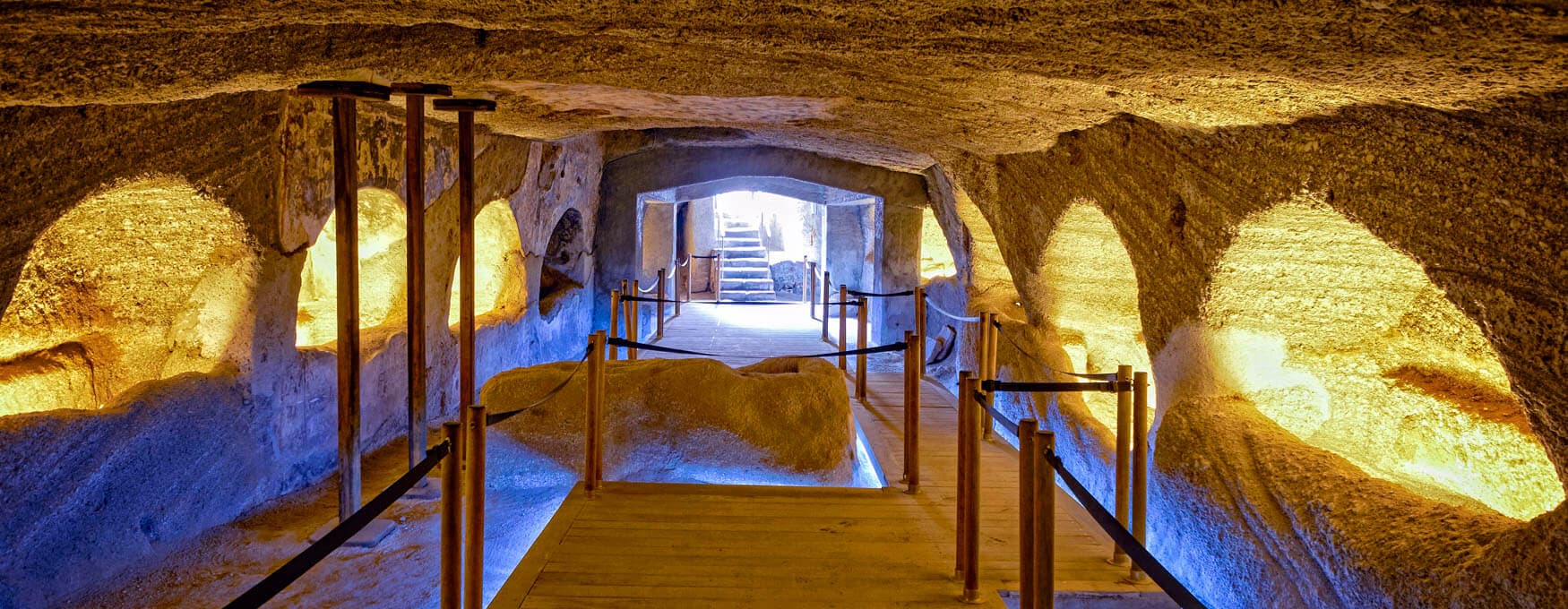
The Catacombs of Milos comprise the extensive communal burial ground of the early Christian period on the island. Initially, the monument consisted of three independent arcades (A, B, C) carved into the porous volcanic rock, which today connect to each other, forming a unified complex along with a rectangular burial chamber.
Architecture and Decoration
Each arcade is of different dimensions, with a width of up to five metres and a height of up to two and a half metres. Arched recesses are carved into the walls, the well-known arcosolia, where the tombs are located, while there were tombs also found in the floor. Despite the passage of time, traces of colour and inscriptions remain. These inscriptions are invaluable, as they provide information about the names of Christians, ecclesiastical offices, and the early belief in guardian angels protecting the tombs.
The Arcades and the Use of the Monument
Today, visitors enter through arcade B, where the unique two-storey tomb and the inscription of “Prevyteron” (Elders) dominate. The Catacombs were more than a cemetery. They were also a place of worship, as evidenced by a tomb in Arcade B that served as an altar and likely belonged to a prominent bishop of Milos. Arcade A stands out for its spaciousness and double family tombs, while recent excavations have revealed new corridors with interesting finds. Finally, Arcade C survives only partially due to the collapse of its southern section.
This monument stands as a compelling testament to the earliest Christian presence in the Aegean, combining the evocative ambience with historical insight. A visit to the Catacombs offers a unique experience, transporting travellers to the heart of the island’s faith and traditions.